

Tucson’s Lifestyle
“Warning” The Scroll Test
(Your thumb might get tired from scrolling down the page.)
Life of Tucson
People ask me all the time what it's actually like to live here — not the postcard version, but the real, everyday feeling of calling Tucson home. So here's my honest answer, the same one I'd give a friend.
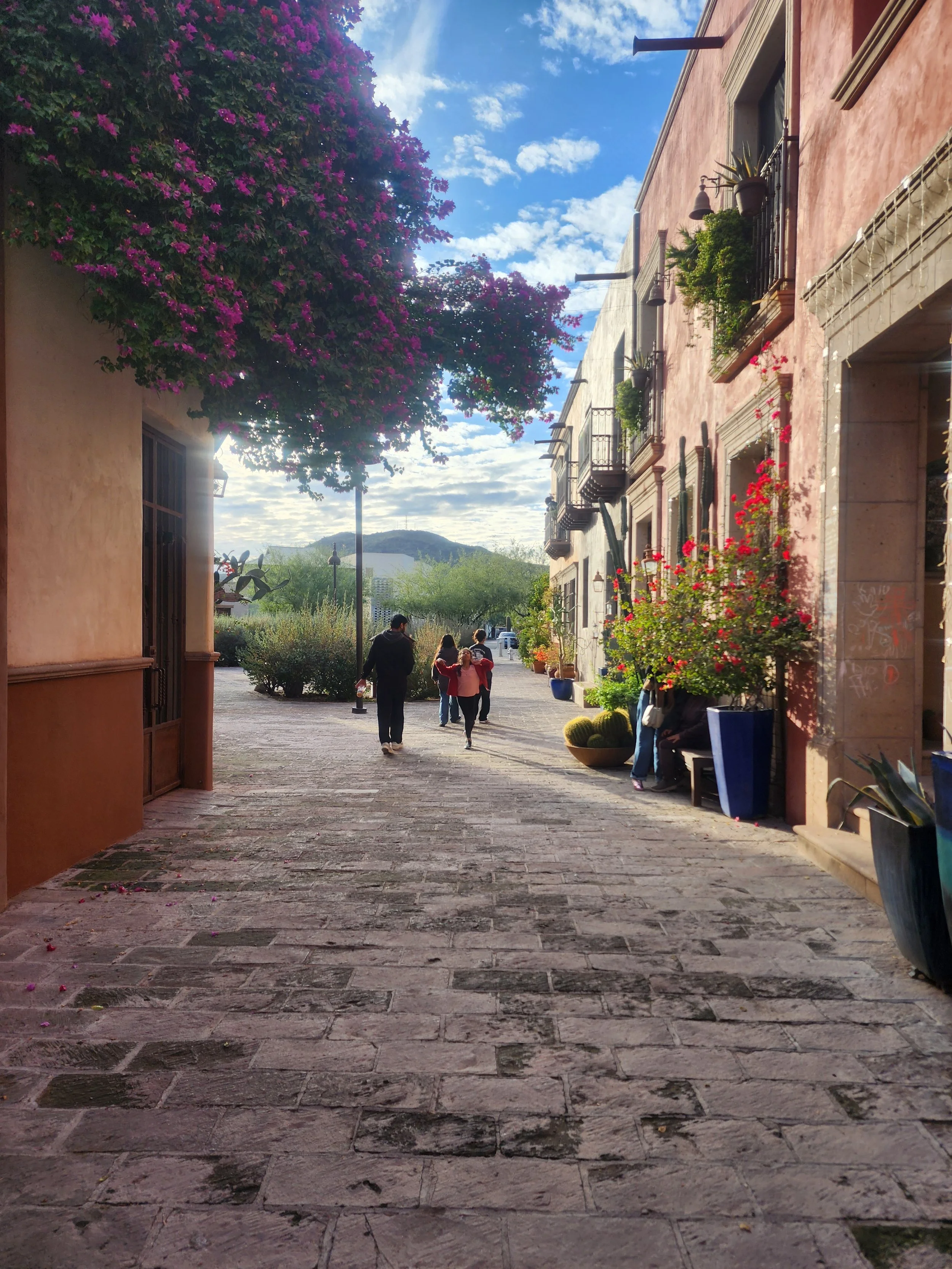
Tucson sits in a valley ringed by five mountain ranges, which means no matter where you are in the city, you can look up and see the horizon change color as the sun moves across the sky. Locals plan their evenings around sunset the way other cities plan around happy hour — people pull over on the side of the road, step out onto their patios, or just pause mid-conversation because the sky is doing something you don't want to miss. That's not an exaggeration. It happens almost daily, and after a while, you start to expect it.
The pace here is different too. Tucson is a real city — nearly a million people in the metro area, a major university, a growing food and arts scene — but it doesn't move like one. Mornings start early, especially in summer, because the best hours to be outside are before the heat sets in. You'll see people hiking, biking, and walking dogs at 6 a.m., then the city quiets down through the hot afternoon, then comes back to life in the evening for dinner on a patio, a sunset hike, or a walk through one of the historic neighborhoods. It's a rhythm built around the desert, not against it, and once you settle into it, it's hard to imagine living any other way.
What people underestimate is how much culture is packed into a city this size. Tucson was named a UNESCO City of Gastronomy — the first in the U.S. — and it earns that title. Mexican food here isn't an approximation of something else; it's rooted in centuries of Sonoran tradition, and you'll find it at taco stands, family-run spots that have been open for generations, and a handful of James Beard–recognized restaurants, often within blocks of each other. Add in a serious coffee and craft beer scene, a lively downtown with live music most nights, and the energy of a Division I university town, and it stops feeling like a sleepy desert outpost pretty quickly.
Then there's the landscape itself, which is honestly what wins people over. The saguaro cactus — the ones with arms, the ones that look like they belong in a cartoon — only grow in the Sonoran Desert, and Tucson is one of the very few places on earth where you'll see them by the thousands, right up against the edges of the city. Saguaro National Park splits the city into east and west, so you can be hiking among thousand-year-old cacti in the morning and back home in time for lunch. The mountains around the city — the Catalinas, the Rincons, the Tucson Mountains — offer everything from easy desert trails to a drive up Mount Lemmon that takes you from cactus and desert scrub to pine forest and, in winter, actual snow, all in about 45 minutes.
Summers are real here, and I won't pretend otherwise — June and July bring stretches of 100°F+ days. But it's a dry heat, and life adapts around it: pools, misted patios, early mornings, and then the monsoon season arrives in July, when dramatic afternoon thunderstorms roll in over the mountains, the desert turns green almost overnight, and the smell of rain on hot pavement — creosote, locals call it — becomes one of those small things you find yourself missing if you're ever away.
And then there's winter, which is really the heart of why so many people fall in love with Tucson in the first place. While much of the country is shoveling snow, Tucson is sitting at a comfortable 65-70°F with sunshine most days. It's why so many people from colder states first discover Tucson as a place to escape to for a few months — and why, for a lot of them, a few months eventually turns into a full-time move.
One more thing worth knowing: "Tucson" isn't really one single feel — it's a collection of distinct communities ringing the city, and where you land changes the experience quite a bit. Up against the mountains in the Catalina Foothills, homes sit on larger lots with sweeping views and a quiet, upscale feel, just minutes from downtown. North of the city, Oro Valley offers a more planned, resort-like setting — golf courses, walking paths, and newer construction that draws a lot of families and retirees alike. Further out, Marana has become one of the fastest-growing areas around Tucson, with new neighborhoods, open desert views, and a suburban pace that still feels close to everything. South of the city, Sahuarita and Vail both offer a quieter, more tight-knit community feel — good schools, newer homes, and a slower rhythm that a lot of families are drawn to. And then there's Green Valley, one of the most established retirement communities in the Southwest, known for its active-adult neighborhoods, golf, and a genuinely welcoming, social atmosphere for those settling into a new chapter.
Every one of these places is still "Tucson" in the ways that matter — the sunsets, the mountains, the sense of space — but each has its own personality. Part of what I do is help people figure out which of these feels most like home before they ever put in an offer.
If I had to sum up what I love most about living here, it's this: Tucson doesn't ask you to choose between a real city and a genuine connection to the outdoors. You get both, on the same day, without much effort. That's rare, and it's the thing I think people don't fully understand about this place until they've actually lived it.